 MEAW
진단
같은 턱 통증이라도 원인은 사람마다 다릅니다. 씹는 근육의 통증일 수도 있고, 관절 속 디스크의 문제일 수도 있습니다. 이를 물고 있는 습관이나 수면이 배경이 되기도 합니다.1
국제 진단 기준은 턱의 움직임과 씹는 근육, 관절을 검사하고, 스트레스와 습관을 묻는 설문을 함께 하도록 정하고 있습니다.2
뼈의 변화는 CT로, 디스크의 위치는 MRI로 확인합니다. 영상 검사는 필요한 경우에 합니다.3
원인이 확인되어야 어떤 치료가 필요하고, 어떤 치료는 하지 않아도 되는지 정할 수 있습니다.
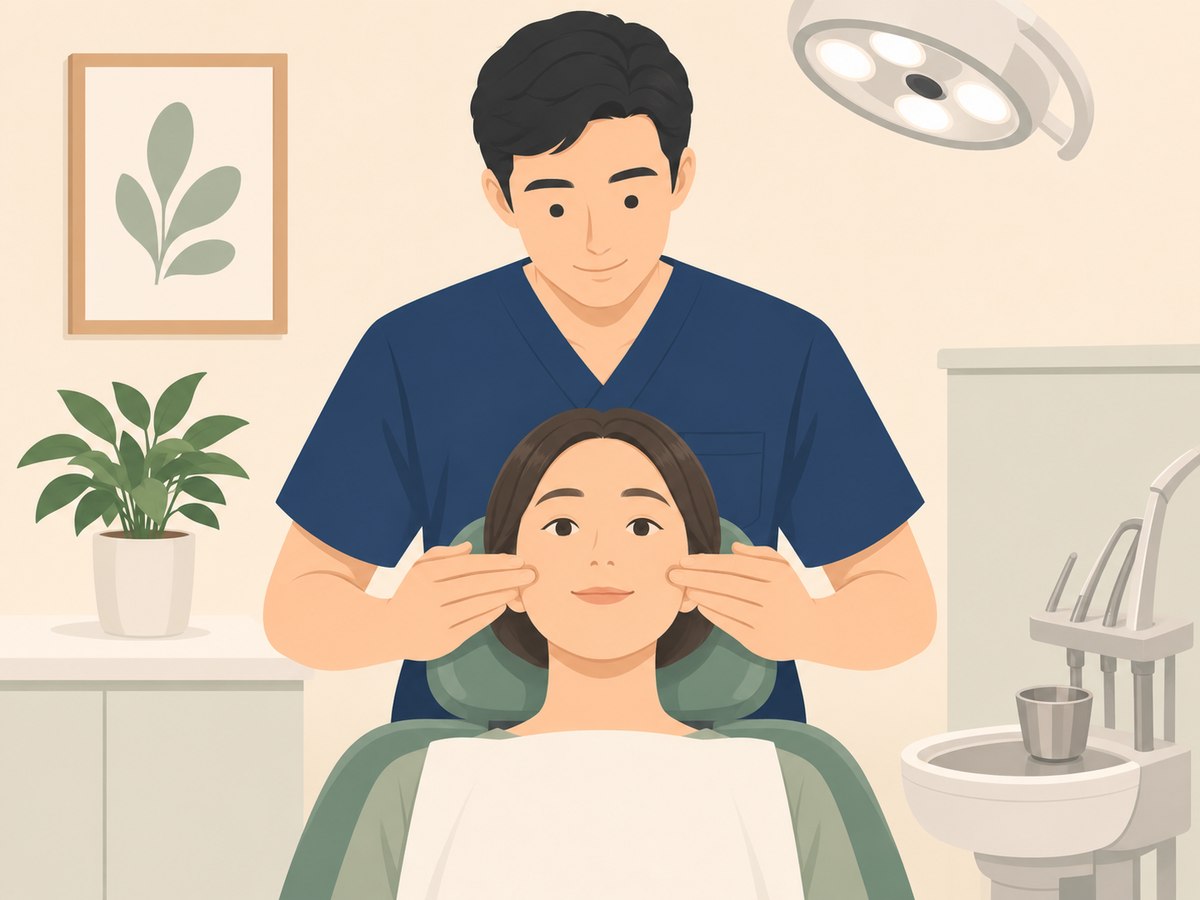
치료를 정하는 원칙
- ✓진단에 따라 정합니다. 증상 이름만 보고 치료를 고르지 않습니다.
- ✓부담이 적고 되돌릴 수 있는 치료부터 씁니다.
- ✓같은 진단이라도 계획은 사람마다 다릅니다.
- ✓치료 중간에 경과를 다시 확인하고, 반응에 따라 계획을 조정합니다.
기본이 되는 치료
교육과 자가 관리, 턱 운동, 손으로 하는 근육·관절 치료가 기본입니다.4, 5 장치(스플린트)는 교육과 함께 쓸 때 통증이 가장 많이 줄었습니다.6
수술이 필요한 경우
대부분의 턱관절 장애는 수술 없이 좋아집니다.7 입이 벌어지지 않는 닫힌 잠김에서도 약물과 재활로 관리한 결과가 수술한 결과와 차이가 없었습니다.8 수술은 다른 치료로 해결되지 않을 때 맨 마지막에 검토합니다.
함께 확인하는 요인
턱관절 장애는 두통이나 허리 통증처럼 다른 부위의 통증과 함께 나타나는 경우가 많습니다.9 그래서 영향이 큰 요인부터 다루고, 반응을 보면서 다음 단계를 정합니다. 필요하면 이비인후과나 신경과 같은 다른 과와 함께 봅니다.
치아와 맞물림
옆으로 비켜 물리는 맞물림과 한쪽 반대 물림은 20년 추적 연구에서 턱관절 증상의 위험 요인으로 꼽혔습니다.10
씹는 근육과 관절
근육의 통증과 관절 속 디스크 상태를 함께 봅니다.
목과 어깨
목과 어깨의 통증이 함께 있는 경우가 많아 같이 확인합니다.
수면과 습관
수면의 질이 나쁜 사람에게 턱관절 장애가 4배가량 흔했습니다.11 낮에 이를 물고 있는 습관도 치료 계획에 넣습니다.1
검사가 필요한 경우
- ✓턱이나 얼굴 통증이 이어지거나 자꾸 되돌아온다
- ✓식사나 대화가 부담스럽다
- ✓두통이나 목 통증이 함께 있다
- ✓턱이 걸리거나 입이 덜 벌어진다
- ✓치료를 받아 왔는데 나아지지 않는다
치료 안내 시리즈
각 치료가 어떤 경우에 쓰이고 어떻게 진행되는지 한 편씩 설명합니다.
참고문헌
- Slade GD, Ohrbach R, Greenspan JD, et al. Painful temporomandibular disorder: decade of discovery from OPPERA studies. J Dent Res. 2016;95(10):1084–1092.
- Schiffman E, Ohrbach R, Truelove E, et al. Diagnostic Criteria for Temporomandibular Disorders (DC/TMD) for clinical and research applications. J Oral Facial Pain Headache. 2014;28(1):6–27.
- Ahmad M, Hollender L, Anderson Q, et al. Research diagnostic criteria for temporomandibular disorders (RDC/TMD): development of image analysis criteria and examiner reliability for image analysis. Oral Surg Oral Med Oral Pathol Oral Radiol Endod. 2009;107(6):844–860.
- Busse JW, Casassus R, Carrasco-Labra A, et al. Management of chronic pain associated with temporomandibular disorders: a clinical practice guideline. BMJ. 2023;383:e076227.
- Yao L, Sadeghirad B, Li M, et al. Management of chronic pain secondary to temporomandibular disorders: a systematic review and network meta-analysis of randomised trials. BMJ. 2023;383:e076226.
- Al-Moraissi EA, Farea R, Qasem KA, et al. Effectiveness of occlusal splint therapy in the management of temporomandibular disorders: network meta-analysis of randomized controlled trials. Int J Oral Maxillofac Surg. 2020;49(8):1042–1056.
- Lomas J, Gurgenci T, Jackson C, et al. Temporomandibular dysfunction. Aust J Gen Pract. 2018;47(4):212–215.
- Schiffman EL, Look JO, Hodges JS, et al. Randomized effectiveness study of four therapeutic strategies for TMJ closed lock. J Dent Res. 2007;86(1):58–63.
- National Academies of Sciences, Engineering, and Medicine. Temporomandibular Disorders: Priorities for Research and Care. Washington, DC: National Academies Press; 2020.
- Magnusson T, Egermark I, Carlsson GE. A prospective investigation over two decades on signs and symptoms of temporomandibular disorders and associated variables. A final summary. Acta Odontol Scand. 2005;63(2):99–109.
- Roithmann CC, Silva CAGD, Pattussi MP, et al. Subjective sleep quality and temporomandibular disorders: systematic literature review and meta-analysis. J Oral Rehabil. 2021;48(12):1380–1394.