 MEAW
턱과 목은 함께 움직입니다
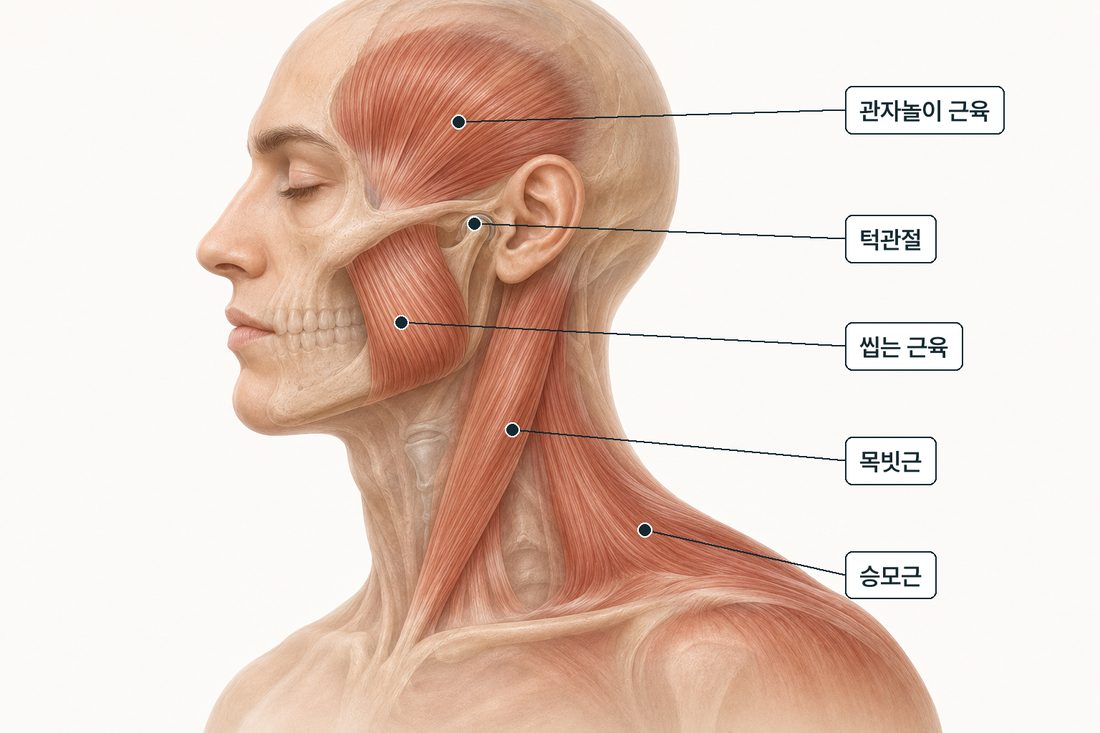
입을 벌리고 씹을 때 머리와 목도 같이 움직입니다. 건강한 성인의 움직임을 측정한 연구에서, 입을 벌릴 때 머리가 살짝 뒤로 젖혀졌고 머리의 움직임이 턱보다 먼저 시작되었습니다.1
머리를 움직이지 못하게 고정하면 턱이 벌어지는 폭이 줄었습니다.2 씹는 근육에 통증이 있을 때는 머리와 목이 더 많이 움직였습니다.3
함께 나타나는 양상
미국 성인 약 19만 명을 조사한 연구에서, 턱 통증이 있는 사람의 54%가 목 통증을 함께 겪고 있었습니다.4 목이 불편한 정도와 턱이 불편한 정도는 함께 커지는 경향을 보입니다.5
- ✓목을 돌리거나 젖히는 범위가 줄었다
- ✓목 옆과 어깨 위를 누르면 아프다
- ✓오래 씹거나 입을 크게 벌린 뒤 목이 뻐근하다
- ✓턱이 아픈 날 목도 더 불편하다
턱관절 장애가 있는 사람은 목을 움직이는 범위가 줄어 있고, 목 근육을 눌렀을 때 더 쉽게 아팠습니다.6 어깨 통증을 함께 말하는 사람도 절반가량이라는 조사가 있습니다.7
씹는 근육이 아픈 유형
목 근육의 압통은 관절보다 씹는 근육이 아픈 유형의 턱관절 장애에서 더 뚜렷했습니다.8
목 진료가 먼저인 경우
팔이나 손이 저리고 힘이 빠지는 경우, 다친 뒤에 시작된 목 통증, 열이 나거나 밤에 더 심해지는 통증은 목 자체의 문제부터 확인해야 합니다. 정형외과나 신경외과 진료가 먼저입니다.
턱과 목이 이어지는 원리
신경 신호가 모이는 자리
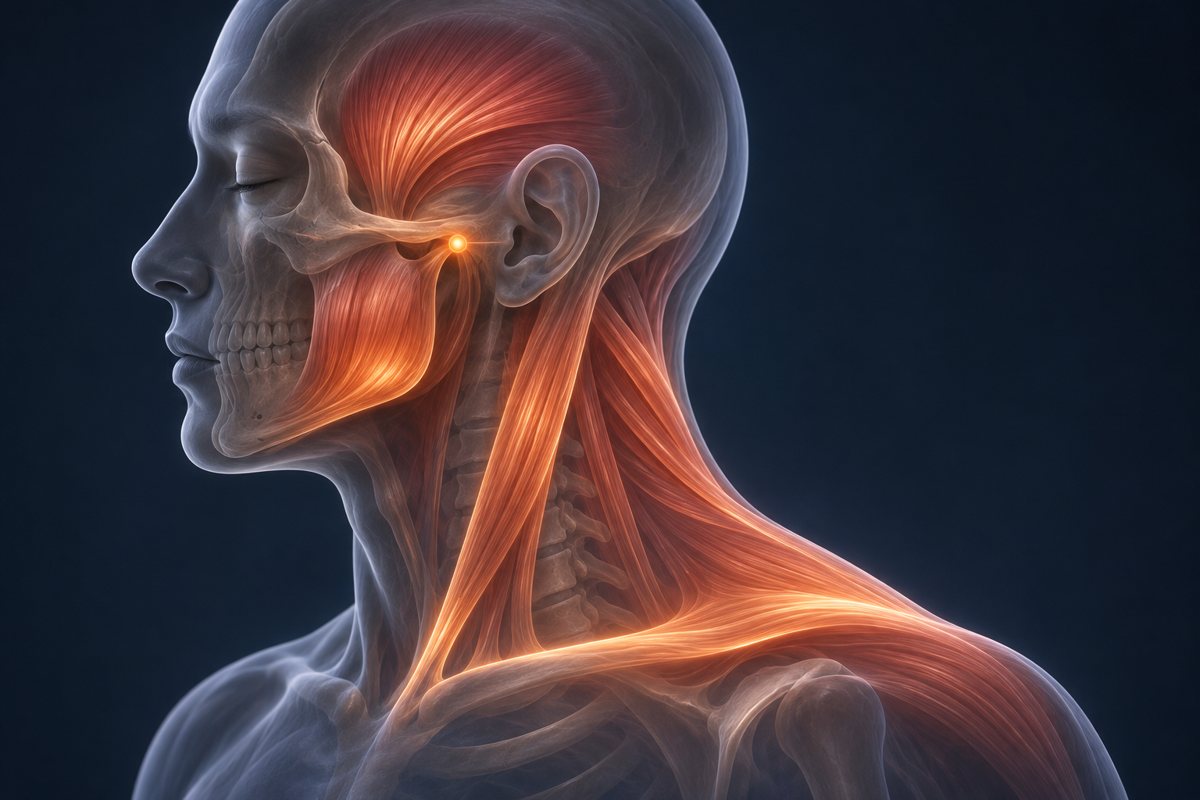
턱과 얼굴에서 오는 통증 신호와 목 위쪽에서 오는 통증 신호는 뇌간의 같은 신경핵으로 모입니다. 그래서 한쪽의 통증이 다른 쪽에서 느껴질 수 있습니다.9, 10
함께 작동하는 근육
입을 벌리고 씹는 동작에는 목 근육이 함께 참여합니다. 씹는 근육의 긴장이 오래가면 목 근육이 하는 일도 늘어납니다.1, 3
치료에서의 연결
목을 함께 치료하면 턱 통증이 줄었다는 연구가 있습니다. 연구 일곱 편을 모은 분석에서, 씹는 근육이 아픈 턱관절 환자에게 목 도수치료와 목 운동을 했을 때 턱 통증이 줄었습니다.11
턱관절 장애를 치료한 뒤 목 통증과 목의 불편이 함께 줄었다는 연구도 있습니다.12
- ✓씹는 근육과 목 근육을 눌러 아픈 자리 찾기
- ✓목을 돌리고 숙이는 범위 확인
- ✓입이 벌어지는 범위와 움직이는 길 확인
- ✓이 악물기·이갈이 습관 확인
참고문헌
- Eriksson PO, Häggman-Henrikson B, Nordh E, Zafar H. Co-ordinated mandibular and head-neck movements during rhythmic jaw activities in man. J Dent Res. 2000;79(6):1378–1384.
- Häggman-Henrikson B, Nordh E, Zafar H, Eriksson PO. Head immobilization can impair jaw function. J Dent Res. 2006;85(11):1001–1005.
- Wiesinger B, Häggman-Henrikson B, Hellström F, Wänman A. Experimental masseter muscle pain alters jaw-neck motor strategy. Eur J Pain. 2013;17(7):995–1004.
- Plesh O, Adams SH, Gansky SA. Temporomandibular joint and muscle disorder-type pain and comorbid pains in a national US sample. J Orofac Pain. 2011;25(3):190–198.
- Olivo SA, Fuentes J, Major PW, Warren S, Thie NM, Magee DJ. The association between neck disability and jaw disability. J Oral Rehabil. 2010;37(9):670–679.
- Cuenca-Martínez F, Herranz-Gómez A, Madroñero-Miguel B, et al. Craniocervical and cervical spine features of patients with temporomandibular disorders: a systematic review and meta-analysis of observational studies. J Clin Med. 2020;9(9):2806.
- Weinberg M, Olivier B, Kunene S. Shoulder girdle disability, dysfunction, and pain in participants with temporomandibular joint disorders: a cross-sectional survey on prevalence and associations. Physiother Can. 2025;77(4):466–476.
- Almoznino G, Zini A, Zakuto A, et al. Cervical muscle tenderness in temporomandibular disorders and its associations with diagnosis, disease-related outcomes, and comorbid pain conditions. J Oral Facial Pain Headache. 2020;34(1):67–76.
- Pankrath F, Pelai EB, Oliveira-Souza AIS, et al. Integration of nociceptive activity from orofacial, cranial and cervical regions in the trigeminocervical nucleus: a scoping review with clinical implications. J Oral Facial Pain Headache. 2025;39(3):1–12.
- Bartsch T, Goadsby PJ. The trigeminocervical complex and migraine: current concepts and synthesis. Curr Pain Headache Rep. 2003;7(5):371–376.
- Bednarczyk V, Proulx F, Paez A. The effectiveness of cervical rehabilitation interventions for pain in adults with myogenic temporomandibular disorders: a systematic review and meta-analysis. J Oral Rehabil. 2024;51(6):1091–1107.
- Cimino R, Bucci R, Rongo R, Michelotti A, Deregibus A. Short-term effects of counselling versus occlusal splint therapy in TMD pain patients on neck pain and dysfunction: a randomised trial. J Oral Rehabil. 2025;52(12):2441–2448.