 MEAW
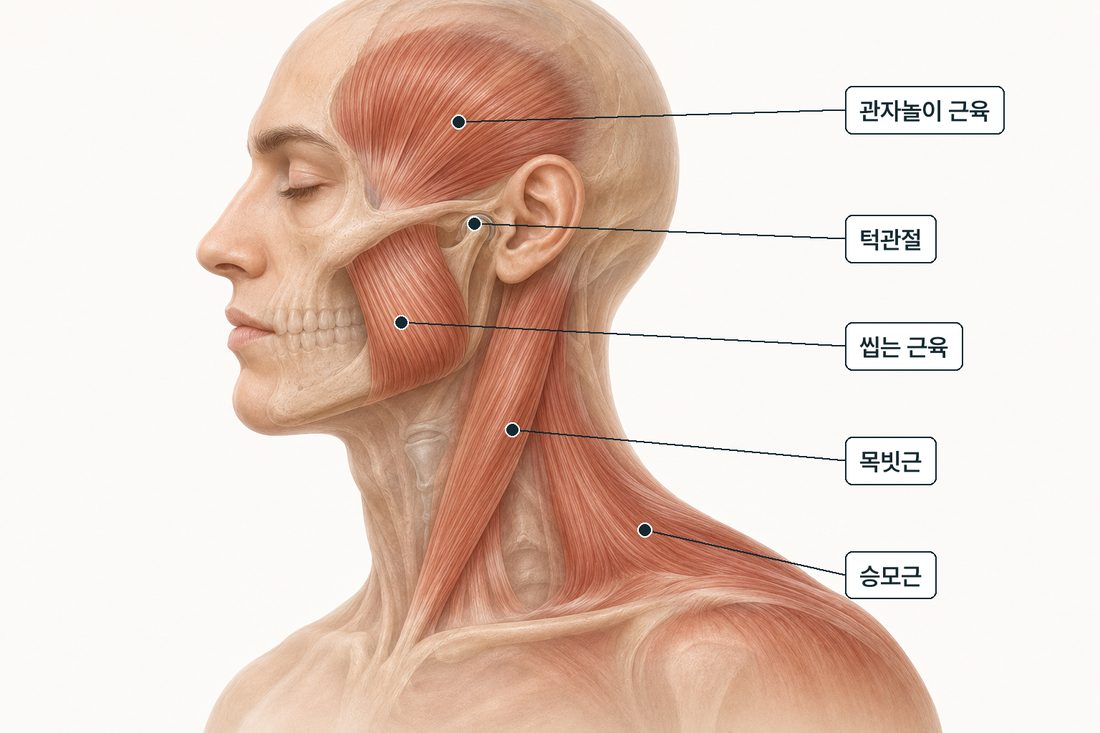
관자놀이까지 이어진 씹는 근육
씹는 근육은 턱에만 있지 않습니다. 관자놀이 근육은 머리 옆면에 부채 모양으로 넓게 붙어 있고, 이를 물 때마다 함께 힘을 씁니다.
턱관절 장애에서 오는 두통은 국제 두통 분류에 정식 항목으로 올라 있습니다. 보통 관자놀이 쪽에서 느껴집니다.1
턱에서 오는 두통의 양상
성인 1,230명을 조사한 연구에서 턱 증상이 있는 사람의 56.5%가 두통을 겪었습니다. 턱 증상이 없는 사람은 31.9%였습니다.2 턱관절 클리닉을 찾은 환자 가운데는 85.5%가 두통을 함께 겪고 있었습니다.3
- ✓관자놀이 쪽이 아프다
- ✓씹거나 입을 크게 벌릴 때 두통이 달라진다
- ✓이를 악문 뒤에 두통이 심해진다
- ✓턱이 아프기 시작한 무렵부터 두통이 생겼다
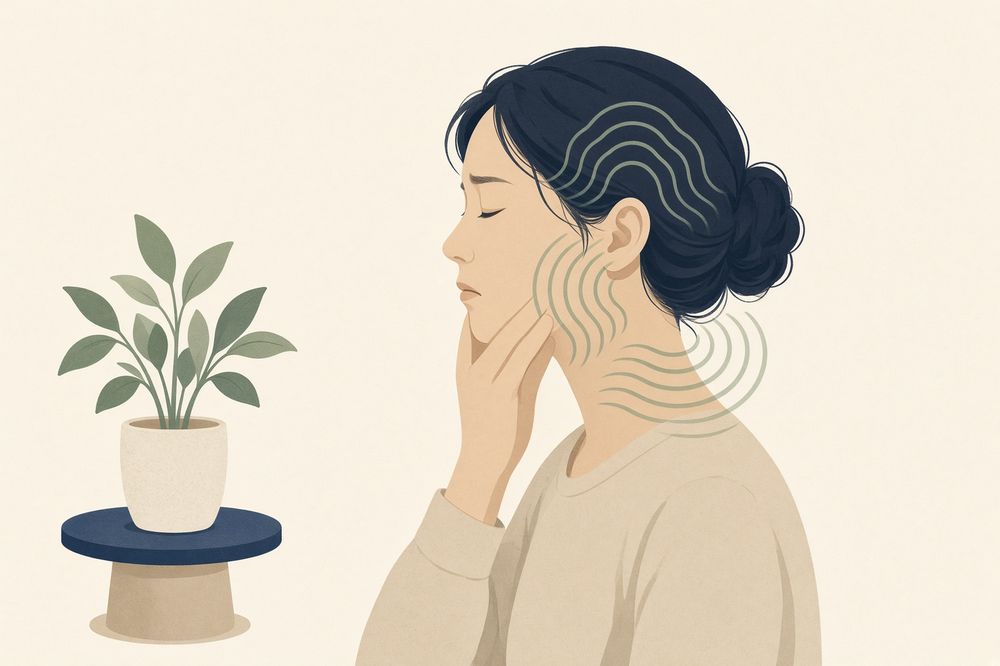
관자놀이 두통이 턱을 움직일 때 달라지는지, 관자놀이 근육을 누르면 평소의 두통이 나타나는지를 확인합니다. 이 두 가지를 확인하면 턱에서 오는 두통의 89%를 가려낼 수 있었습니다.4
누를 때 나타나는 평소의 두통
만성 긴장형 두통 환자 30명 가운데 23명은 관자놀이 근육을 눌렀을 때 평소의 두통이 그대로 나타났습니다.5
신경과 진료가 먼저인 신호
갑자기 시작된 극심한 두통, 열이 나거나 마비와 어눌한 말이 함께 오는 두통, 65세 이후 처음 생긴 두통, 다친 뒤에 시작된 두통은 신경과 진료가 먼저입니다.6
편두통과 턱관절
함께 나타나는 두 질환
편두통이 있는 사람에게는 턱관절 장애가, 턱관절 장애가 있는 사람에게는 편두통이 더 흔했습니다.7 턱관절 장애가 없던 성인 2,410명을 3년가량 지켜본 연구에서는 편두통이 있던 사람에게 턱관절 장애가 새로 생길 위험이 1.7배였습니다.8 두 질환의 통증은 모두 얼굴의 감각을 맡는 신경(삼차신경)을 거쳐 전달됩니다.9
아픈 턱과 두통
두통과의 관련이 뚜렷한 쪽은 통증이 있는 턱관절 장애였습니다. 소리만 나고 아프지 않은 경우에는 관련이 보이지 않았습니다.10 이갈이도 턱 통증과 함께 있을 때 두통과의 관련이 커졌습니다.11
진통제를 먹는 날의 수
진통제를 먹는 날이 한 달에 10~15일을 넘는 상태가 석 달 넘게 이어지면 약 때문에 두통이 계속될 수 있습니다. 약물과용두통이라고 부릅니다.1, 12 이때는 약을 먹는 횟수를 줄이는 것이 가장 먼저 할 치료입니다.12
치료에서의 연결
편두통과 턱 통증이 함께 있는 여성을 대상으로 한 연구가 있습니다. 편두통 약과 마우스피스(스플린트)를 함께 써서 두 가지를 같이 치료했을 때 편두통이 뚜렷하게 좋아졌습니다.13
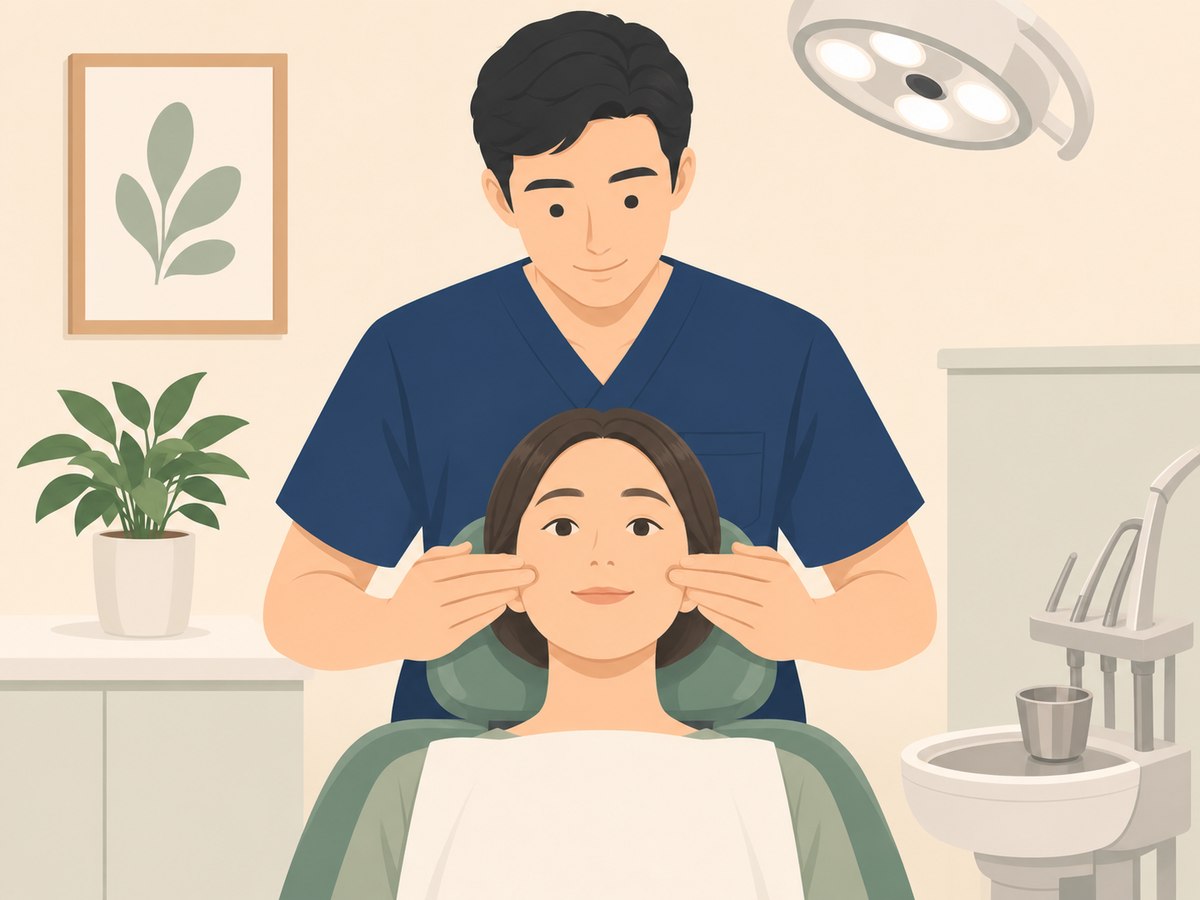
- ✓관자놀이와 볼의 씹는 근육을 눌러 아픈 자리 찾기
- ✓입이 벌어지는 범위와 움직이는 길 확인
- ✓턱 소리, 이 악물기·이갈이 습관 확인
- ✓두통이 언제, 어디서, 어떻게 아픈지 듣기
턱과 관련된 두통이면 씹는 근육의 통증과 습관을 함께 치료합니다. 턱과 관련이 없는 두통이면 신경과 진료로 이어집니다.
참고문헌
- Headache Classification Committee of the International Headache Society. The International Classification of Headache Disorders, 3rd edition. Cephalalgia. 2018;38(1):1–211.
- Gonçalves DA, Bigal ME, Jales LC, et al. Headache and symptoms of temporomandibular disorder: an epidemiological study. Headache. 2010;50(2):231–241.
- Franco AL, Gonçalves DA, Castanharo SM, et al. Migraine is the most prevalent primary headache in individuals with temporomandibular disorders. J Orofac Pain. 2010;24(3):287–292.
- Schiffman E, Ohrbach R, List T, et al. Diagnostic criteria for headache attributed to temporomandibular disorders. Cephalalgia. 2012;32(9):683–692.
- Fernández-de-las-Peñas C, Ge HY, Arendt-Nielsen L, et al. The local and referred pain from myofascial trigger points in the temporalis muscle contributes to pain profile in chronic tension-type headache. Clin J Pain. 2007;23(9):786–792.
- Do TP, Remmers A, Schytz HW, et al. Red and orange flags for secondary headaches in clinical practice: SNNOOP10 list. Neurology. 2019;92(3):134–144.
- Dias MF, Ferro AC, Spavieri JHP, et al. Exploring the bidirectional association between migraine and temporomandibular disorders: a systematic review and meta-analysis. J Oral Rehabil. 2026;53(3):794–806.
- Tchivileva IE, Ohrbach R, Fillingim RB, et al. Temporal change in headache and its contribution to the risk of developing first-onset temporomandibular disorder in the OPPERA study. Pain. 2017;158(1):120–129.
- Romero-Reyes M, Akerman S, Rapoport AM. Optimising combined treatment for migraine and temporomandibular disorders (TMDs). Cephalalgia. 2025;45(9):3331024251368882.
- Réus JC, Polmann H, Souza BDM, et al. Association between primary headaches and temporomandibular disorders: a systematic review and meta-analysis. J Am Dent Assoc. 2022;153(2):120–131.e6.
- Fernandes G, Franco AL, Gonçalves DA, et al. Temporomandibular disorders, sleep bruxism, and primary headaches are mutually associated. J Orofac Pain. 2013;27(1):14–20.
- Ashina S, Terwindt GM, Steiner TJ, et al. Medication overuse headache. Nat Rev Dis Primers. 2023;9(1):5.
- Gonçalves DA, Camparis CM, Speciali JG, et al. Treatment of comorbid migraine and temporomandibular disorders: a factorial, double-blind, randomized, placebo-controlled study. J Orofac Pain. 2013;27(4):325–335.