 MEAW
턱 통증과 함께 오는 허리·목 통증
목과 어깨, 허리가 오래 아픈 사람은 47%가 턱과 얼굴의 증상을 자주 겪었습니다. 그런 통증이 없는 사람은 12%였습니다.1
턱관절 장애로 진료받는 사람의 66%는 오래된 허리 통증을 함께 갖고 있었습니다.2
대만에서 6만 5천 명을 15년 동안 지켜본 연구에서, 허리 통증이 있던 사람은 턱관절 장애가 새로 생길 위험이 1.6배였습니다.3
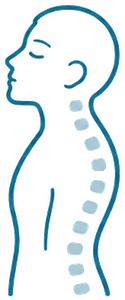
함께 나타나는 양상
턱이 불편한 사람은 목 뒤 근육이 버티는 힘이 약했고, 윗목이 8도가량 덜 돌아갔습니다.4
- ✓턱이 아픈 날 목과 허리도 더 불편하다
- ✓고개를 돌리는 범위가 줄었다
- ✓오래 앉아 있으면 턱과 목이 함께 뻐근하다
- ✓어릴 때부터 허리가 자주 아팠다
어릴 때의 허리 통증
덴마크에서 9,639명을 어릴 때부터 지켜본 연구가 있습니다. 11살 때 허리가 자주 아팠던 아이는 어른이 되어 턱이 아플 가능성이 2배가량 높았습니다.5
척추 진료가 먼저인 신호
팔다리가 저리거나 힘이 빠지는 경우, 다친 뒤에 시작된 통증, 밤에 더 심해지는 통증은 정형외과나 신경외과 진료가 먼저입니다.
척추와 맞물림
휜 척추와 맞물림
척추가 휜 청소년은 위아래 이가 옆으로 엇갈려 물리는 경우가 2배가량 많았습니다. 연구 14편, 3,018명을 모은 분석입니다.6 척추가 휜 어린이의 64%는 두 가지가 넘는 맞물림 문제를 갖고 있었고, 또래는 38%였습니다.7
턱과 몸의 균형
턱의 위치와 몸의 균형을 다룬 연구 21편 가운데 14편이 둘 사이의 관련을 보고했습니다.8
서로 이어진 통증
280명을 2년 동안 지켜본 연구에서, 척추 통증이 있던 사람에게 턱 통증이 새로 생기기 쉬웠습니다. 턱 증상이 있던 사람에게는 척추 통증이 새로 생기기 쉬웠습니다.9
치료에서의 연결
지도받는 자세 운동은 오래된 턱 통증에 강하게 권고되는 치료입니다.10 목을 풀어 주는 치료와 목 운동은 턱 통증을 줄였습니다. 연구 14편, 825명을 모은 분석입니다.11
- ✓턱관절과 씹는 근육 검사
- ✓목을 돌리고 숙이는 범위 확인
- ✓목과 허리의 통증 확인
- ✓자세 운동과 목 운동 지도
척추의 문제가 큰 경우에는 정형외과와 함께 진료합니다.
참고문헌
- Wiesinger B, Malker H, Englund E, et al. Back pain in relation to musculoskeletal disorders in the jaw-face: a matched case-control study. Pain. 2007;131(3):311–319.
- Kleykamp BA, Ferguson MC, McNicol E, et al. The prevalence of comorbid chronic pain conditions among patients with temporomandibular disorders: a systematic review. J Am Dent Assoc. 2022;153(3):241–250.e10.
- Lee KC, Wu YT, Chien WC, Chung CH. The prevalence of first-onset temporomandibular disorder in low back pain and associated risk factors: a nationwide population-based cohort study with a 15-year follow-up. Medicine (Baltimore). 2020;99(3):e18686.
- de Oliveira-Souza AIS, de O Ferro JK, Barros MMMB, et al. Cervical musculoskeletal disorders in patients with temporomandibular dysfunction: a systematic review and meta-analysis. J Bodyw Mov Ther. 2020;24(4):84–101.
- Mansoori M, Exposto CR, Bech BH, et al. Association between preadolescent spinal pain and painful TMD and headache in young adulthood. J Pain. 2026;47:106372.
- Gámiz-Bermúdez F, Ibáñez-Vera AJ, Obrero-Gaitán E, et al. Relationship between stomatognathic alterations and idiopathic scoliosis: a systematic review with meta-analysis of observational studies. EFORT Open Rev. 2023;8(10):771–780.
- Laskowska M, Olczak-Kowalczyk D, Zadurska M, et al. Evaluation of a relationship between malocclusion and idiopathic scoliosis in children and adolescents. J Child Orthop. 2019;13(6):600–606.
- Perinetti G, Contardo L. Posturography as a diagnostic aid in dentistry: a systematic review. J Oral Rehabil. 2009;36(12):922–936.
- Marklund S, Wiesinger B, Wänman A. Reciprocal influence on the incidence of symptoms in trigeminally and spinally innervated areas. Eur J Pain. 2010;14(4):366–371.
- Busse JW, Casassus R, Carrasco-Labra A, et al. Management of chronic pain associated with temporomandibular disorders: a clinical practice guideline. BMJ. 2023;383:e076227.
- Qu J, Qian Y, Zhang Y, et al. Efficacy of manipulation and therapeutic exercise applied to the neck region of patients with temporomandibular disorders: a systematic review and meta-analysis. J Stomatol Oral Maxillofac Surg. 2025;126(6S):102530.