 MEAW
귀 바로 앞의 턱관절
턱관절은 귓구멍 바로 앞에 있고, 둘 사이의 뼈벽은 얇습니다.
턱관절 장애 환자를 모아 본 분석에서 귀 먹먹함은 74.8%, 귀 통증은 55.1%, 이명은 52.1%, 어지럼은 40.8%에서 나타났습니다.1
턱관절 장애가 있는 사람은 이명을 겪을 가능성이 4배가량 높았습니다.2
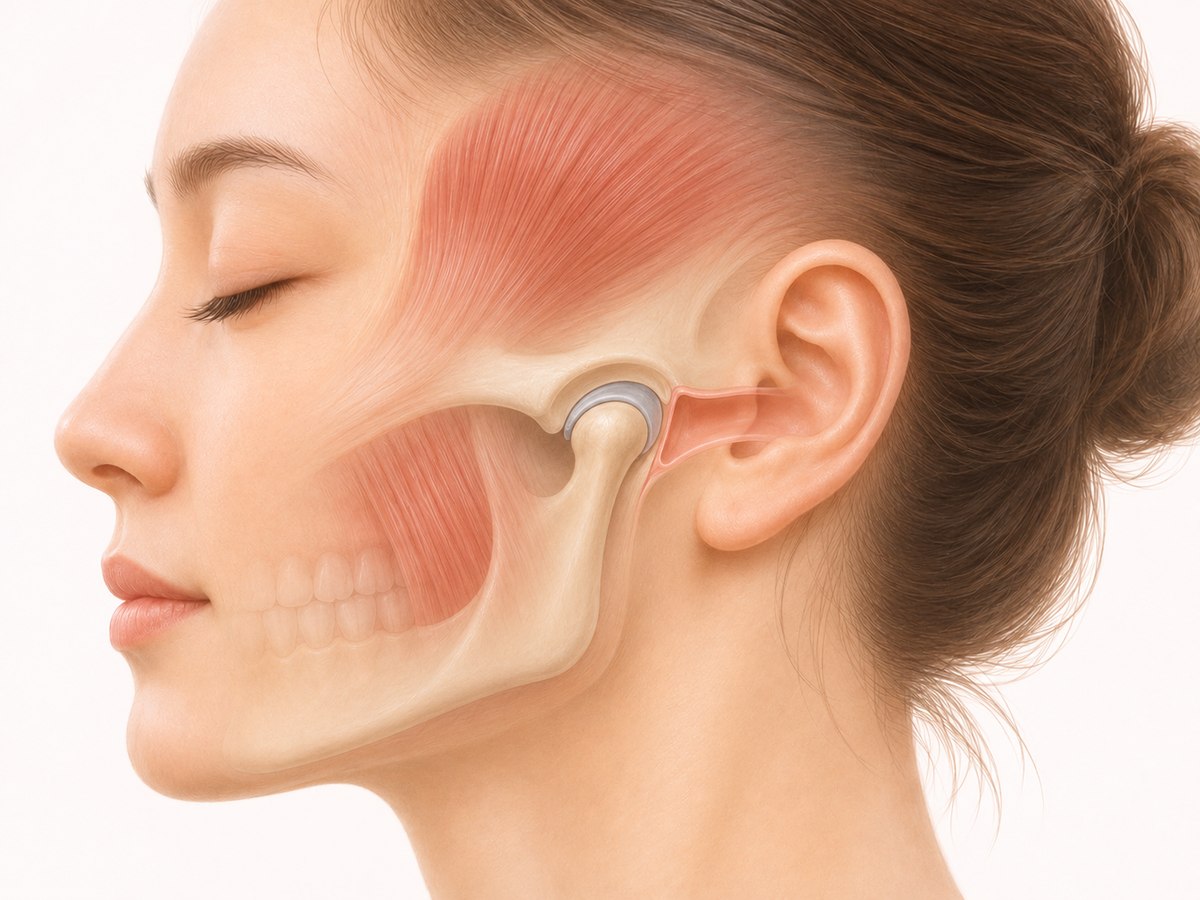
턱과 관련된 귀 증상의 양상
아래 증상이 턱 증상과 함께 있으면 턱관절도 확인합니다.
- ✓비행기를 탄 것처럼 귀가 먹먹하다
- ✓이명이 있다
- ✓귀가 아픈데 귀 검사는 정상이다
- ✓턱이 아픈 날 귀 증상도 심해진다
턱이나 목에서 오는 감각이 이명을 일으키거나 바꾸기도 합니다.3 이명이 턱이나 목의 통증과 함께 시작했거나, 함께 좋아지고 나빠지는 것이 가장 강한 신호였습니다.4

이비인후과 진료가 먼저인 신호
갑자기 한쪽 귀가 안 들릴 때, 맥박처럼 뛰는 이명이 있을 때, 한쪽 귀에만 이명이나 청력 저하가 이어질 때는 이비인후과 진료가 먼저입니다.5 귀에서 분비물이 나오거나 열이 날 때도 같습니다. 갑자기 생긴 청력 저하는 빨리 치료할수록 회복이 좋습니다.6
턱과 귀가 이어지는 원리
신호가 만나는 자리
턱과 목에서 오는 감각 신호는 뇌줄기에서 소리 신호를 처음 받는 자리로도 들어갑니다. 턱과 목에서 오는 신호가 달라지면 이명의 세기가 바뀔 수 있습니다.7
신경을 같이 쓰는 근육
씹는 근육과 귀 안의 작은 근육은 같은 신경이 맡고 있습니다. 턱 근육의 긴장이 귀 먹먹함으로 이어진다는 설명이 있습니다.8
번져서 느껴지는 통증
귀가 아픈 사람의 절반가량은 귀 밖에 원인이 있었습니다.9 턱관절 장애는 그 대표적인 원인으로 꼽힙니다.10
치료 뒤의 변화
턱 통증과 이명이 함께 있는 환자에게 운동과 교육에 더해 턱과 목을 손으로 치료했을 때 이명이 더 줄었다는 연구가 있습니다.11 다른 연구에서는 턱 통증이 줄어든 만큼 이명도 함께 줄었습니다.12
귀에서 원인을 찾지 못했다면 턱관절도 확인합니다.
참고문헌
- Porto De Toledo I, Stefani FM, Porporatti AL, et al. Prevalence of otologic signs and symptoms in adult patients with temporomandibular disorders: a systematic review and meta-analysis. Clin Oral Investig. 2017;21(2):597–605.
- Alghamdi HA, Alwably AA, Alsaad FI, et al. Temporomandibular joint disorders and tinnitus: a systematic review and meta-analysis. BMC Oral Health. 2026;26(1). doi:10.1186/s12903-026-07898-3
- Michiels S, Ganz Sanchez T, Oron Y, et al. Diagnostic criteria for somatosensory tinnitus: a Delphi process and face-to-face meeting to establish consensus. Trends Hear. 2018;22:2331216518796403.
- Michiels S, Cardon E, Gilles A, et al. Somatosensory tinnitus diagnosis: diagnostic value of existing criteria. Ear Hear. 2022;43(1):143–149.
- Tunkel DE, Bauer CA, Sun GH, et al. Clinical practice guideline: tinnitus. Otolaryngol Head Neck Surg. 2014;151(2 Suppl):S1–S40.
- Chandrasekhar SS, Tsai Do BS, Schwartz SR, et al. Clinical practice guideline: sudden hearing loss (update) executive summary. Otolaryngol Head Neck Surg. 2019;161(2):195–210.
- Shore SE, Roberts LE, Langguth B. Maladaptive plasticity in tinnitus: triggers, mechanisms and treatment. Nat Rev Neurol. 2016;12(3):150–160.
- Ramírez LM, Ballesteros LE, Sandoval GP. Topical review: temporomandibular disorders in an integral otic symptom model. Int J Audiol. 2008;47(4):215–227.
- Ramazani F, et al. Referred otalgia: common causes and evidence-based strategies for assessment and management. Can Fam Physician. 2023;69(11):757–761.
- Ally M, Moinie A, Lomas J, et al. Aetiology and management options for secondary referred otalgia: a systematic review and meta-analyses. Eur Arch Otorhinolaryngol. 2023;280(1):47–59.
- Delgado de la Serna P, Plaza-Manzano G, Cleland J, et al. Effects of cervico-mandibular manual therapy in patients with temporomandibular pain disorders and associated somatic tinnitus: a randomized clinical trial. Pain Med. 2020;21(3):613–624.
- van der Wal A, Michiels S, Van de Heyning P, et al. Reduction of somatic tinnitus severity is mediated by improvement of temporomandibular disorders. Otol Neurotol. 2022;43(3):e309–e315.