 MEAW
만성 통증의 기준
국제 질병 분류에서는 3개월 넘게 이어지거나 반복되는 통증을 만성 통증으로 정의합니다.1 처음 생긴 턱 통증을 6개월 뒤에 다시 확인한 연구에서 절반가량(49%)은 통증이 이어지고 있었습니다.2
통증이 강하거나 지속되는 경우에 만성으로 넘어갈 가능성이 높았습니다.3
턱 통증은 다른 만성 통증과 자주 겹칩니다. 두통, 허리 통증, 섬유근육통, 과민대장 증후군이 대표적입니다.4, 5
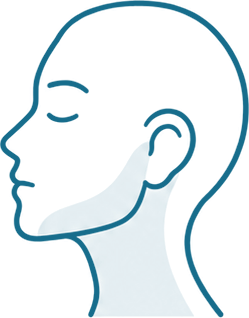
검사가 필요한 양상
- ✓턱·얼굴 통증이 3개월 넘게 이어지거나 자꾸 되돌아온다
- ✓씹기, 말하기가 부담될 만큼 아프다
- ✓두통이나 목, 허리의 통증이 함께 있다
- ✓검사를 받아도 원인이 분명하지 않다
스트레스가 크거나 수면의 질이 나빠지면 턱 통증이 생길 위험이 높았습니다.7
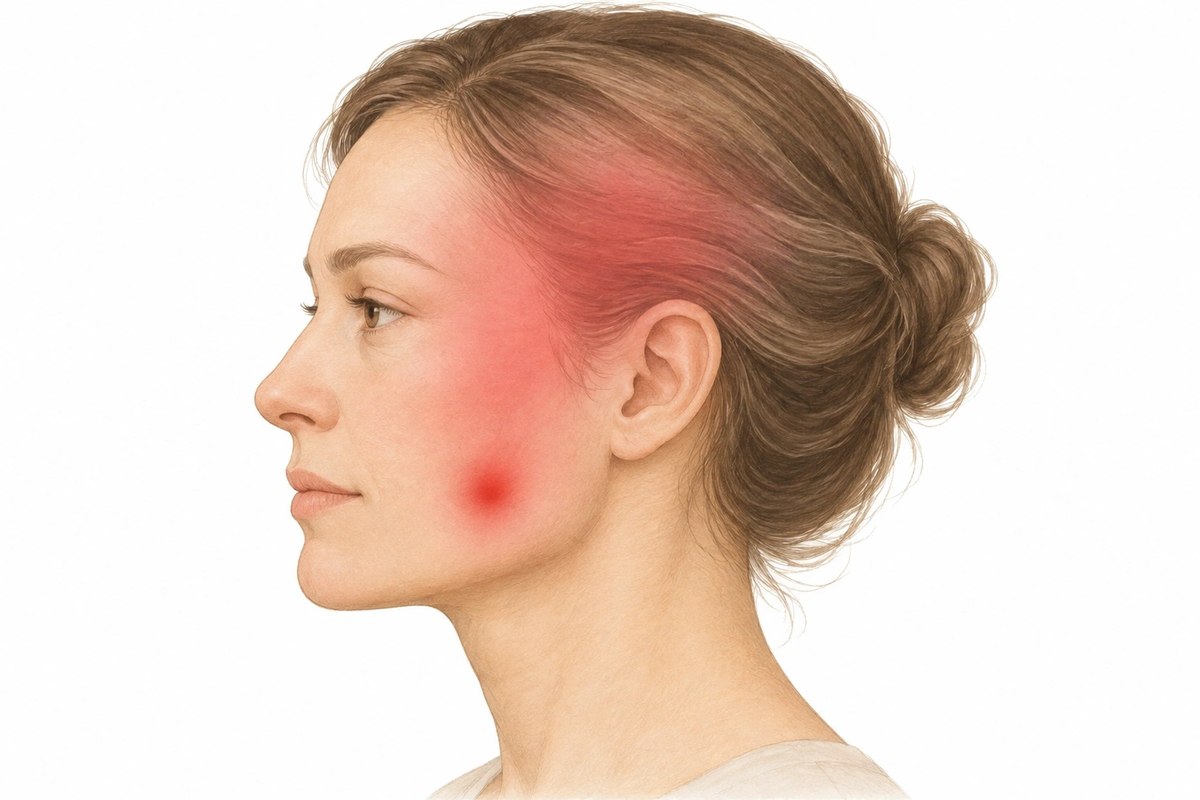
누른 곳과 다른 곳의 통증
턱관절 장애 환자 252명 가운데 61%는 누른 곳과 다른 곳이 아팠습니다. 관자놀이(45%)와 귀(42%)로 번지는 경우가 많았습니다.8
퍼지는 통증과 예민해진 신경
턱과 얼굴, 목 윗부분의 통증 신호는 뇌줄기의 같은 신경 중계소로 모입니다. 그래서 한 부위의 통증이 다른 부위에서 느껴질 수 있습니다.9 턱관절 장애 환자는 목의 기능이 함께 떨어져 있는 경우가 많습니다.10
오래가는 턱 통증이 있는 사람은 턱에서 먼 부위까지 눌림에 더 예민했습니다.11 이런 상태에서는 조직의 손상에 비해 통증이 더 크고 넓게 느껴질 수 있습니다.6
예민함은 통증이 회복되면 함께 줄었습니다.12 그래서 만성 통증에서는 처음의 원인과 함께 예민해진 상태까지 다룹니다.
검사와 치료의 순서
- 1턱관절, 씹는 근육, 목 상태를 차례로 검사합니다.
- 2통증의 기간과 오르내림, 수면과 스트레스를 함께 확인합니다.
- 3교육과 자가 관리, 턱 운동, 손으로 하는 근육·관절 치료를 중심으로 치료합니다.
- 4치료 후 경과를 다시 확인하며 계획을 조정합니다.
몸의 검사와 함께 스트레스와 기분, 생활의 불편을 확인하는 것이 국제 진단 기준입니다.13
3개월 넘게 이어진 턱 통증에 대한 국제 지침은 통증에 대처하는 방법을 익히는 상담 치료, 턱 운동과 스트레칭, 손으로 하는 치료, 교육과 자가 관리를 강하게 권고합니다.14
참고문헌
- Treede RD, Rief W, Barke A, et al. Chronic pain as a symptom or a disease: the IASP Classification of Chronic Pain for the International Classification of Diseases (ICD-11). Pain. 2019;160(1):19–27.
- Meloto CB, Slade GD, Lichtenwalter RN, et al. Clinical predictors of persistent temporomandibular disorder in people with first-onset temporomandibular disorder: a prospective case-control study. J Am Dent Assoc. 2019;150(7):572–581.e10.
- Velly AM, Elsaraj SM, Botros J, et al. The contribution of pain and disability on the transition from acute to chronic pain-related TMD: a 3-month prospective cohort study. Front Pain Res (Lausanne). 2022;3:956117.
- Slade GD, Greenspan JD, Fillingim RB, et al. Overlap of five chronic pain conditions: temporomandibular disorders, headache, back pain, irritable bowel syndrome, and fibromyalgia. J Oral Facial Pain Headache. 2020;34(Suppl):s15–s28.
- Maixner W, Fillingim RB, Williams DA, et al. Overlapping chronic pain conditions: implications for diagnosis and classification. J Pain. 2016;17(9 Suppl):T93–T107.
- Fitzcharles MA, Cohen SP, Clauw DJ, et al. Nociplastic pain: towards an understanding of prevalent pain conditions. Lancet. 2021;397(10289):2098–2110.
- Slade GD, Ohrbach R, Greenspan JD, et al. Painful temporomandibular disorder: decade of discovery from OPPERA studies. J Dent Res. 2016;95(10):1084–1092.
- Alketbi N, Talaat W. Prevalence and characteristics of referred pain in patients diagnosed with temporomandibular disorders according to the Diagnostic Criteria for Temporomandibular Disorders (DC/TMD) in Sharjah, United Arab Emirates. F1000Res. 2022;11:656.
- Bartsch T, Goadsby PJ. The trigeminocervical complex and migraine: current concepts and synthesis. Curr Pain Headache Rep. 2003;7(5):371–376.
- de Oliveira-Souza AIS, de O Ferro JK, Barros MMMB, et al. Cervical musculoskeletal disorders in patients with temporomandibular dysfunction: a systematic review and meta-analysis. J Bodyw Mov Ther. 2020;24(4):84–101.
- La Touche R, Paris-Alemany A, Hidalgo-Pérez A, et al. Evidence for central sensitization in patients with temporomandibular disorders: a systematic review and meta-analysis of observational studies. Pain Pract. 2018;18(3):388–409.
- Slade GD, Sanders AE, Ohrbach R, et al. Pressure pain thresholds fluctuate with, but do not usefully predict, the clinical course of painful temporomandibular disorder. Pain. 2014;155(10):2134–2143.
- Schiffman E, Ohrbach R, Truelove E, et al. Diagnostic Criteria for Temporomandibular Disorders (DC/TMD) for clinical and research applications. J Oral Facial Pain Headache. 2014;28(1):6–27.
- Busse JW, Casassus R, Carrasco-Labra A, et al. Management of chronic pain associated with temporomandibular disorders: a clinical practice guideline. BMJ. 2023;383:e076227.